
Calendar
LOGO Calendar 2026 – August: Jesse Owens
August 1936. The world watched in astonishment as Jesse Owens marched triumphantly in Berlin. With four gold medals around his neck, the American athlete shattered the myth of white racial supremacy before the eyes of the Führer. Yet for the champion, the hardest battle was still to come. When he returned to the United States, Owens – born in Alabama in 1913 – was treated not as a hero, but as the African American he was.
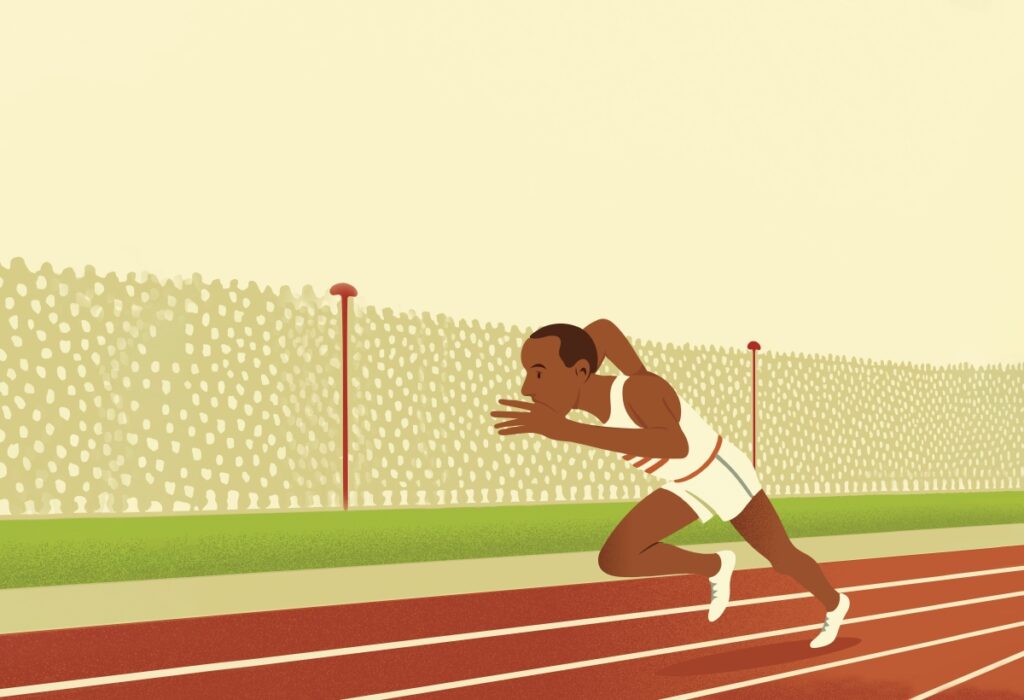
Owens arrived in Berlin already a legend. In 1935, he had delivered what became known as “the greatest 45 minutes in sport”, breaking or equalling six world records in a single competition, including a long jump that stood for a quarter of a century.
The bitter irony of his return
Nazi Germany had granted him a respect denied by his own country. While in Berlin, he travelled and stayed alongside white athletes, but upon his return equality vanished. Jesse went back to the United States expecting recognition from his government – recognition that never came.
The discrimination was open and brutal. President Franklin Delano Roosevelt refused to meet him or even send him a letter, fearing it might upset the racial balance in the American South. The height of his humiliation came during a reception held in his honour in New York: at the Waldorf Astoria, the Olympic hero was not allowed to enter through the main door but was forced to take a service freight elevator to reach the event.
According to former French athlete Maryse Ewanjé-Epée, Owens spent his entire life trying to understand the meaning of his Olympic triumph, without ever fully managing to embody that role.
Olympic gold did not guarantee a dignified life. The glory faded, and Owens found himself working as a laundry worker, a dancer, or appearing in circus-style shows in which his speed was tested against dogs and even cars. “He sold his incredibly fast legs” to survive. Despite his education and his passion for jazz, America offered him little more.
From decline to redemption
Institutional recognition arrived only in the 1950s, when President Dwight Eisenhower appointed him as Goodwill Ambassador to the Third World, with an annual salary of 75,000 dollars. By the end of the decade, however, Owens had definitively left the sporting world and social events behind to found his own public relations company. The ex-athlete devoted himself to delivering motivational speeches across the country, recounting episodes from his life that revealed his honesty and integrity.
With the rise of the Black Power movement, Owens was harshly criticised for initially distancing himself from it. The government even used him to “mediate” with activist athletes ahead of the 1968 Mexico City Olympic Games. But the role of the “good Black man” was no longer sustainable. Four years later Owens broke his silence with the book I Have Changed, acknowledging his ideological shift: “I realised now that militancy in the best sense of the word was the only answer where the black man was concerned.”
On 31 March 1980, Owens died of lung cancer. Paying tribute to him, President Jimmy Carter recognised the enduring significance of the athlete’s legacy: “Perhaps no athlete better symbolised the human struggle against tyranny, poverty, and racial bigotry.”
“It doesn’t matter what you find at the end of a run, what matters is how you feel while you are running. The miracle is not to have reached the finish line, but to have had the courage to start.”